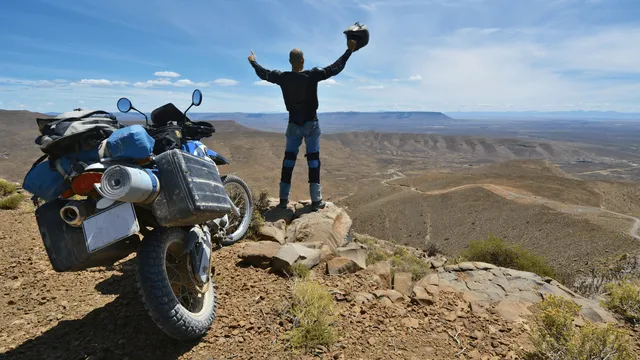
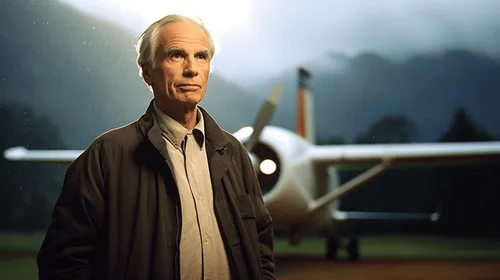
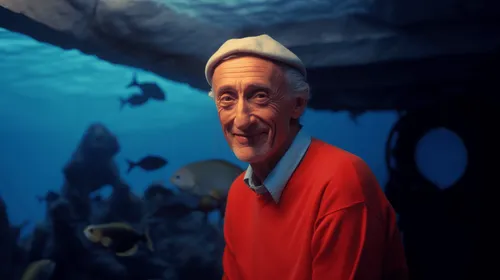
As an Explorer, you treat the map as a starting point, not a boundary. The familiar goes stale fast; you're already tracking what's over the next ridge, trading routine for terrain you haven't walked yet. Uncertainty doesn't slow you down — it's the condition you work best in.
Curiosity runs the itinerary. You test the edges of what's known and keep moving once you've seen them — in work as much as on the road: the market nobody has entered, the tool nobody on the team has tried, the role that didn't exist until you took it. Your rule is simple: no borders you didn't choose yourself.
The trip out is really a trip inward — every border crossed teaches you something about the one you woke up with. Growth doesn't happen in a single place; it happens in the gap between who you were at the last stop and who you are at this one. Freedom, for you, is not an idea. It's a direction you keep walking in.
Trail Marks
Adjectives flatter. Behavior testifies. Count how many of these are simply true of you.
Tap every mark that's true of you.
0of 10 marks
The road hasn't opened yet. Take the test and find where yours starts.
Your Essence
Core Desire
To keep discovering who you are by going further than you've been — through new ground, fewer boundaries, and more of the unknown.
Restlessness with the ordinary · Aimlessness · Alienation · Financial instability · Inconsistency
“We shall not cease from exploration, and the end of all our exploring will be to arrive where we started and know the place for the first time.”
T. S. Eliot, Little Gidding
Your Journey
I
Goal
You want to embody freedom itself — and prove by example that discovery, not routine, is what actually grows a person.
II
Strategy
You differentiate by refusing the norm — offering a genuine, first-hand perspective that gives people permission to break their own routines.
III
Fears
Waking up to the same conformity every day. Losing the say over your own time. A life that stopped changing and called it stability.
The Whiteout
Every route casts two shadows. One never stops moving. One never leaves the trailhead.
The Escapist
Movement as anesthesia — leaving so nothing catches up to you.
Early signs
Restlessness
Every relationship ends the moment it asks for more of your time.
Avoidance
You've moved cities to avoid finishing something hard, not to start something new.
Isolation
You can describe forty places and can't describe what you're running from.
The remedy
Pick one thing that can't be outrun — a person, a project, a place — and stay through the part that wants you to leave.
The Settler
The itch you've talked yourself out of feeling.
Early signs
Hesitating
You've had the same recurring trip idea for three years and a folder of tabs you never book — and the unlaunched offer is filed right next to them.
Excusing
You describe your routine as "stable" more often than you describe it as good.
Numbing
Someone else's photos from somewhere new make your stomach drop, and you scroll past fast.
The remedy
Book the smallest version of the thing you keep not doing — the weekend, the pilot, the first paying client. The itch doesn't need a sabbatical; it needs proof you'll still answer it.
Four Expressions of the Explorer
Four ways the horizon calls. One of them is your heading.
Adventurer
The Adventurer moves on the rush of not knowing what's next. Daring and quick-witted, it stays organized enough to handle whatever the unknown throws at it — the risk is the point, not a side effect. Meaning, for the Adventurer, comes from the body: real terrain, real weather, real consequences. It chases first-hand experience over any account of it, because a secondhand story never counted. In business: the one who takes the assignment with no playbook — new territory, live consequences, learning at full speed.
Pioneer
The Pioneer leaves the familiar on purpose, chasing the promise of what nobody has proven yet. Being first matters more than being safe — first to market, first to try the method, first to name the idea. It doesn't follow existing routes; it lays new ones and lets others catch up. Restless, inventive energy is its baseline, not its exception.
Seeker
The Seeker travels light because it's carrying something else — a relentless drive to learn, grow, and keep going past the point most people stop. Independent and patient, it stays on a question long after the answer stops being convenient. Every landscape it moves through doubles as an inward one; the search outside is really a search for meaning inside. It's after a better way of living, not just a better view. In business: the founder for whom the company is an expedition — each venture another leg of a longer search.
Generalist
The Generalist wants competence across the whole map — culture, science, craft, the arts — not mastery of one square inch of it. Breadth is the strategy, not a lack of focus: knowing several fields well enough lets it connect what specialists never think to compare. The range looks scattered from outside. From inside, it's how the Generalist builds a working model of how the world actually operates. In business: the connector who imports the fix from another industry — range that looks scattered until it ships what the specialists couldn't.
Expedition Parties
No one is a single archetype. Who travels with you decides what kind of Explorer you become — every pairing below is a different route.
Scroll to choose
Explorer+
=
The Empire Builder
You don't just wander — you stake the ground you find and build lasting order on it.
No one follows a brochure; they follow the one who has been there. People join an Explorer for one reason: proof the way out is real.
Before they follow, they need to see
ProofYou've actually been where you say you've been — receipts, not brochure copy.
ReturnEvidence you came back changed, not just tired.
CandorYou name what went wrong on the trip, not only the highlight reel.
ReadinessA route mapped clearly enough that a first-timer can actually follow it.
What turns the caravan back
Selling the destination without naming the difficulty.
Changing the route without saying why.
Going quiet the moment things get hard.
Show them the way is real, and they'll follow you past the edge of their own map.
The Field Log
An Explorer brand is betrayed first by brochure language. Cut the polish. Say what actually happened out there.
What an Explorer won't sayWhat an Explorer says
The headline
What an Explorer won't say
We help you discover exciting new possibilities for your business
What an Explorer says
I go where your business hasn't been yet, and report back exactly what's there.
The pricing page
What an Explorer won't say
Our packages are designed to fit a range of budgets and needs
What an Explorer says
The rate is the rate. It covers the territory, not the hours.
The follow-up
What an Explorer won't say
Just checking in to see if you had any thoughts on my last message
What an Explorer says
The route's mapped. Say the word and we start.
Left at the trailhead
×wanderlust×bucket list×hidden gem×off the beaten path×amazing×epic
Words for the field
routeterrainfirst-handunmappedfield-testedonward
The Outfitter's Ledger
Price is the clearest thing an Explorer brand says about itself. Five laws keep it honest instead of romantic.
§ I
Price the territory, not the miles
Charge for where the work gets someone, not for the hours it took to walk it there.
§ II
Say what the cheap version can't survive
Name the exact condition the budget option breaks under. Gear-grade honesty beats a marketing euphemism.
§ III
No panic sales
A discount timed to fear is a route sold in bad weather. Hold the price; adjust the scope.
§ IV
Charge more for the unmapped work
First-of-its-kind costs more than repeating a known trail. Price the risk you're carrying, not just the labor.
§ V
Turn down terrain you haven't walked
Refusing a job outside your actual experience protects the only currency that matters out here — your word.
The Kit
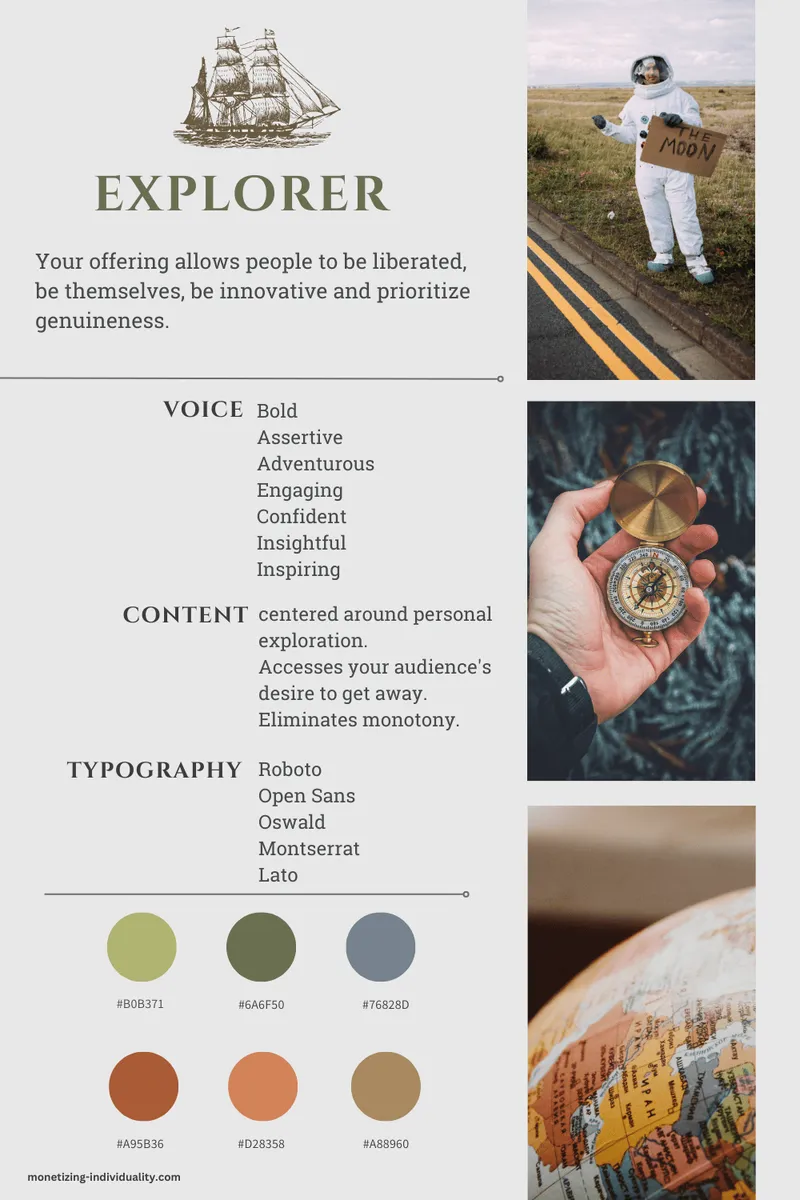
How an Explorer brand looks before it says a word. This page is dressed by its own rules — what you see is the doctrine applied.
The palette
Field-Green Night
#171A10 · the ground
Brass
#B99A67 · the metal
Clay
#D28358 · the mark
Trail-Blaze Terracotta
#9E5230 · the signal
Field Canvas
#F1EBDC · the paper
Fog Slate
#39424C · the shadow
One field-green ground, one metal, earth tones only. Never a rainbow.
The letterforms
Aa
A condensed grotesque
Tall, upright, built for expedition posters and waypoint signage.
Aa
A friendly field sans
Warm and plain — built to pack light and read fast.
Pack this
Dashed rules wherever a line is needed
Generous open ground, night-green and quiet
One brass accent per frame, never more
Squared plates, deckle-edged where paper appears
Leave this behind
Airport-lounge travel stock
Suitcase-and-passport flatlays
Rounded corner brackets or framed portraits
Red anywhere — the only shadow color is fog
The Route Line
Before anyone called it a brand, someone walked out first and brought back the map. That line of first-walkers runs, for now, straight to you.
1325
Ibn Battuta
Left Tangier for Mecca and didn't stop for nearly three decades, crossing Africa, Asia and the Middle East.
1889
Nellie Bly
Circled the world in seventy-two days on newspaper money — then filed the story.
1916
Ernest Shackleton
Brought all twenty-seven men home after the ice took the ship — exploration measured in returns, not records.
1975
Junko Tabei
Survived an avalanche that buried her expedition's camp, then reached the summit of Everest twelve days later — the first woman to stand there.
Now
You
The pattern continues through anyone who goes to check for themselves. That's the whole inheritance.
Famous Explorers
Alexandra David-Néel
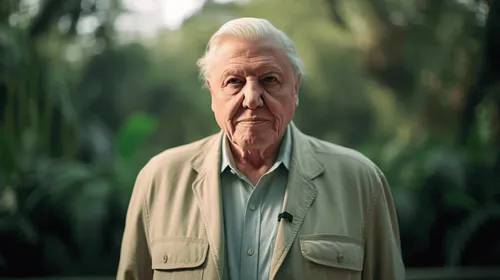
David Attenborough
Douglas Tompkins
Jacques Cousteau
Laura Dekker
Valentina Tereshkova
The Outfitters' Registry
Explorer brands rarely announce that they lead. Each of these proves one law of the road, without raising its voice.
P
Patagonia
House law · The field test
Built gear for its own founder's climbs first and sold what survived them. The product had to work before it had to sell.
N
The North Face
House law · The open door
Named for the hardest, coldest route up a mountain — and built a company around going toward it, not away.
J
Jeep
House law · The road optional
Built for terrain with no road at all, then let owners decide the map didn't apply to them either.
N
National Geographic
House law · The report from the edge
For over a century, sent people to the actual edge of the map and printed exactly what they found there.
A
Airbnb
House law · Belong anywhere
Turned the promise of travel from seeing a place into actually living inside someone else's version of home.
The Three Ranges
The Explorer isn't a role you take once. It's three ranges of a longer route, and each range asks for different footing.
Act I — Early ground
The Restless Years
You leave before anyone asks you to explain why. Every trip teaches you something about your own limits, mostly by exceeding them without a plan.
The work:Go further than the trip needed, on purpose.
Act II — Established
The Charted Years
The routes start repeating; you know which ones hold up. The real risk isn't the unknown anymore — it's mistaking a comfortable loop for a new frontier.
The work:Choose one route nobody's tested instead of five that are safe.
Act III — Mature
The Guide's Years
You've walked enough ground that your real value is the route, not the mileage. The measure of an Explorer at this range is how many people you've gotten safely somewhere new.
The work:Hand someone the map you had to draw yourself.
The Fork in the Trail
Three archetypes are mistaken for the Explorer every day. One question separates each pair.